
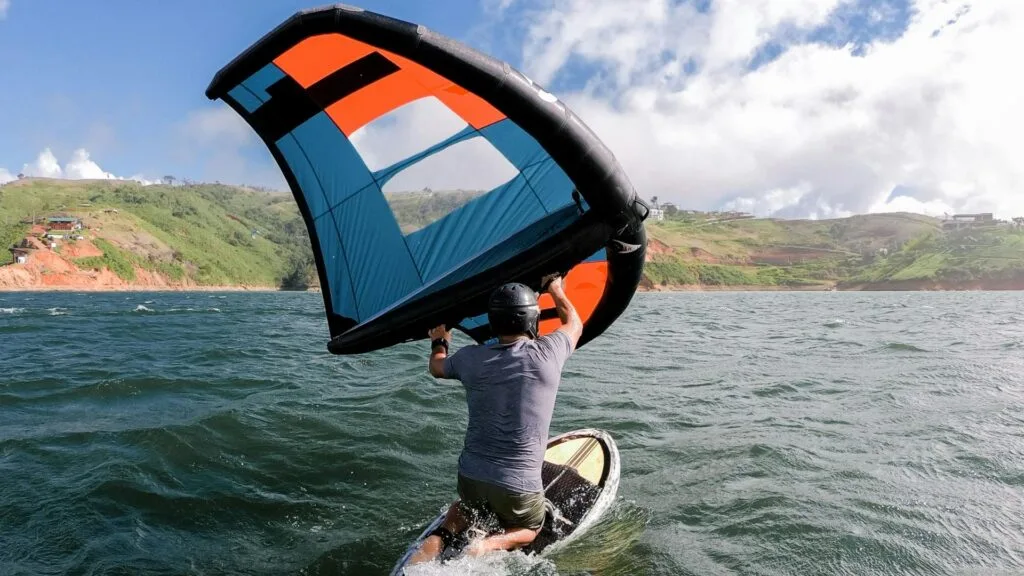
Wingfoiling is the trending wind sport. But to fully enjoy it, you can’t just jump in the water with any wing. Choosing the right wing size according to the wind is crucial for good navigation, safety, and fun without struggling. If you’re wondering how to make the right choice, this guide is here to help clarify things.
Table of contents
The basic principles to know when choosing your wingfoil wing
The wing size is expressed in m2. It can vary from 2m2 to 8m2 or even 9m2 sometimes. Of course we will use a small wing surface when the wind is very strong and vice versa.

How to choose the right size wingfoil wing?
When choosing a kite, there are several factors to consider, such as wind strength, experience and weight (which can also be a factor). Most of the time, a beginner will tend to go for a bigger kite so that he can get away and ride. An advanced rider, on the other hand, will prefer a smaller, more manageable kite.
Choosing the wingfoil wing based on wind strength
| Wind speed (knots) | Beginner (<70 kg) | Beginner (>70 kg) | Advanced (<70 kg) | Advanced (<70 kg) |
| 5-10 knots | 6-7 m² | 7-8 m² | 5-6 m² | 6-7 m² |
| 10-15 knots | 5-6 m² | 6-7 m² | 4-5 m² | 5-6 m² |
| 15-20 knots | 4-5 m² | 5-6 m² | 3-4 m² | 4-5 m² |
| 20-25 knots | 3-4 m² | 4-5 m² | 2-3 m² | 3-4 m² |
| >25 knots | 2-3 m² | 3-4 m² | 2-3 m² | 2-3 m² |
Please note! These figures should not be taken literally. Other factors will come into play, such as the size of your front wing or the spot where you practice, but in most cases, this table is a good average.
The specifics to consider and our practical tips

- Local conditions: Gusty winds may require a slightly larger wing to provide stability between gusts.
- Try before you buy: If possible, test different sizes of wing in a variety of conditions to see what suits you best.
- Ask for advice: Don’t hesitate to consult experts or specialist retailers who can advise you on your needs and local conditions.
- Go for versatility: If you can only buy one wing, opt for an intermediate size capable of covering a wide range of wind conditions.
In short, choosing the right wingfoil wing is super important. If you’re just starting out and don’t have the budget to buy several wings, or even if you just want to buy one, you can turn to the second-hand market.
Our advice for beginners: choose a medium-sized wing that will allow you to cover a wide range of wind conditions. So make the right choice and have fun!
If you’re still unsure about what gear to buy, come and try wingfoil with us by booking your lesson!
If you want to learn wingfoil, we give wingfoil lessons in Portugal on the Obidos lagoon (1h from Lisbon). Don’t hesitate to contact us to book your next adventure! 🤙🏼